
SF32LB52-OED-6’-EPD Development Board User Guide
Development Board Overview
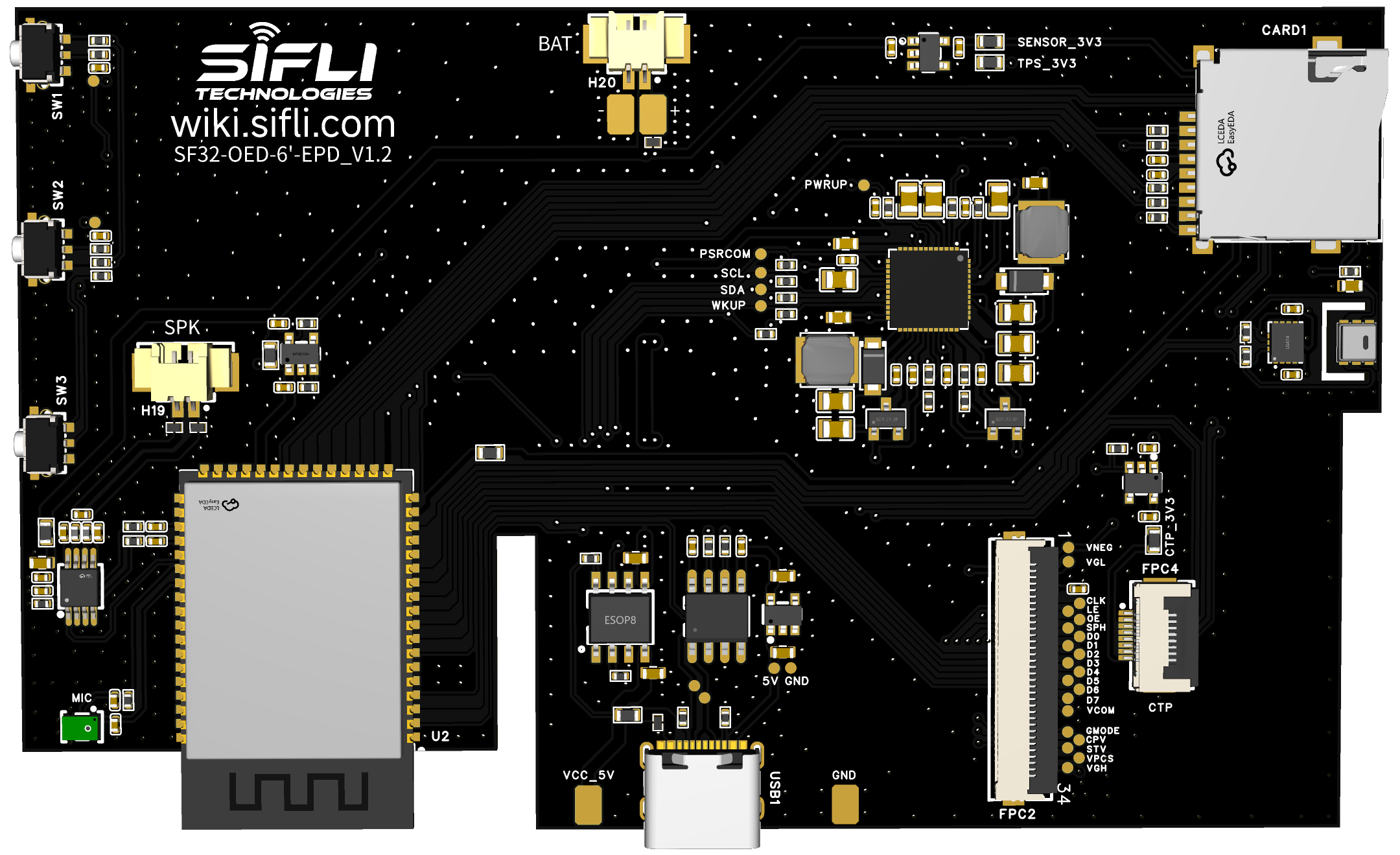
The SF32LB52-OED-6’-EPD is an e-paper display development board based on the SF32LB52-MOD-1 module. It supports a 758 x 1024 (XGA) 6-inch e-paper display, and also supports analog MIC input, analog audio output, SDIO interface, TF card, A+G Sensor, and H+T Sensor, providing developers with abundant hardware interface resources. It can be used to develop various e-paper display applications, helping developers simplify the hardware development process and shorten time to market.
Feature List
This development board has the following features:
Module: onboard SF32LB52-MOD-1-N16R8 module, configured as follows:
Standard SF32LB525UC6 chip, with the following built-in co-packaged configuration:
8MB OPI-PSRAM, interface frequency 144MHz
128Mb QSPI-NOR Flash, interface frequency 72MHz, STR mode
48 MHz crystal
32.768 kHz crystal
Onboard antenna or IPEX antenna connector, selected through a 0-ohm resistor; onboard antenna by default
RF matching network and other resistor, capacitor, and inductor components
Dedicated display interface
8-bit EPD parallel driver interface, brought out through a 34-pin FPC
Supports touchscreens with an I2C interface
Audio
Supports analog MIC input
Analog audio output, onboard Class-D audio PA
Sensor
Supports a 6-axis accelerometer + gyroscope sensor
Supports a humidity + temperature sensor
USB
Type-C interface, supports the onboard USB-to-serial chip for firmware flashing and software DEBUG, and can be used to supply power
Charger
Onboard 1A linear charger, equipped with a 1500mAh lithium battery, and supports charger insertion detection.
SD Card
Supports TF cards using the SPI interface, with an onboard Micro SD card slot
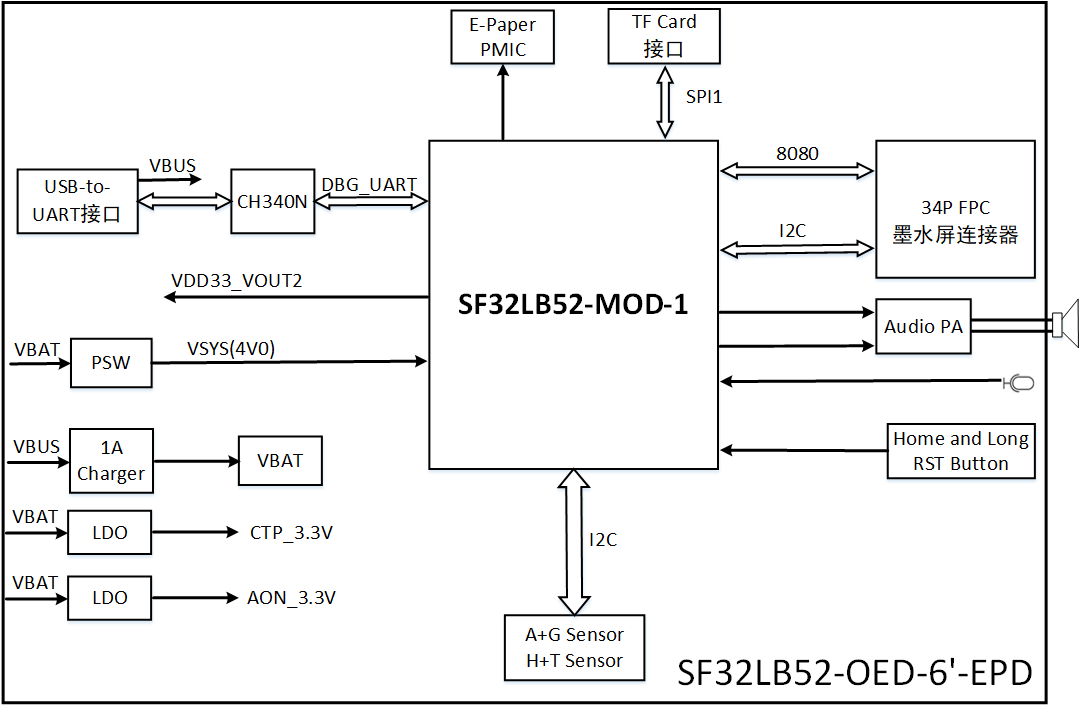
Functional Block Diagram
Component Introduction
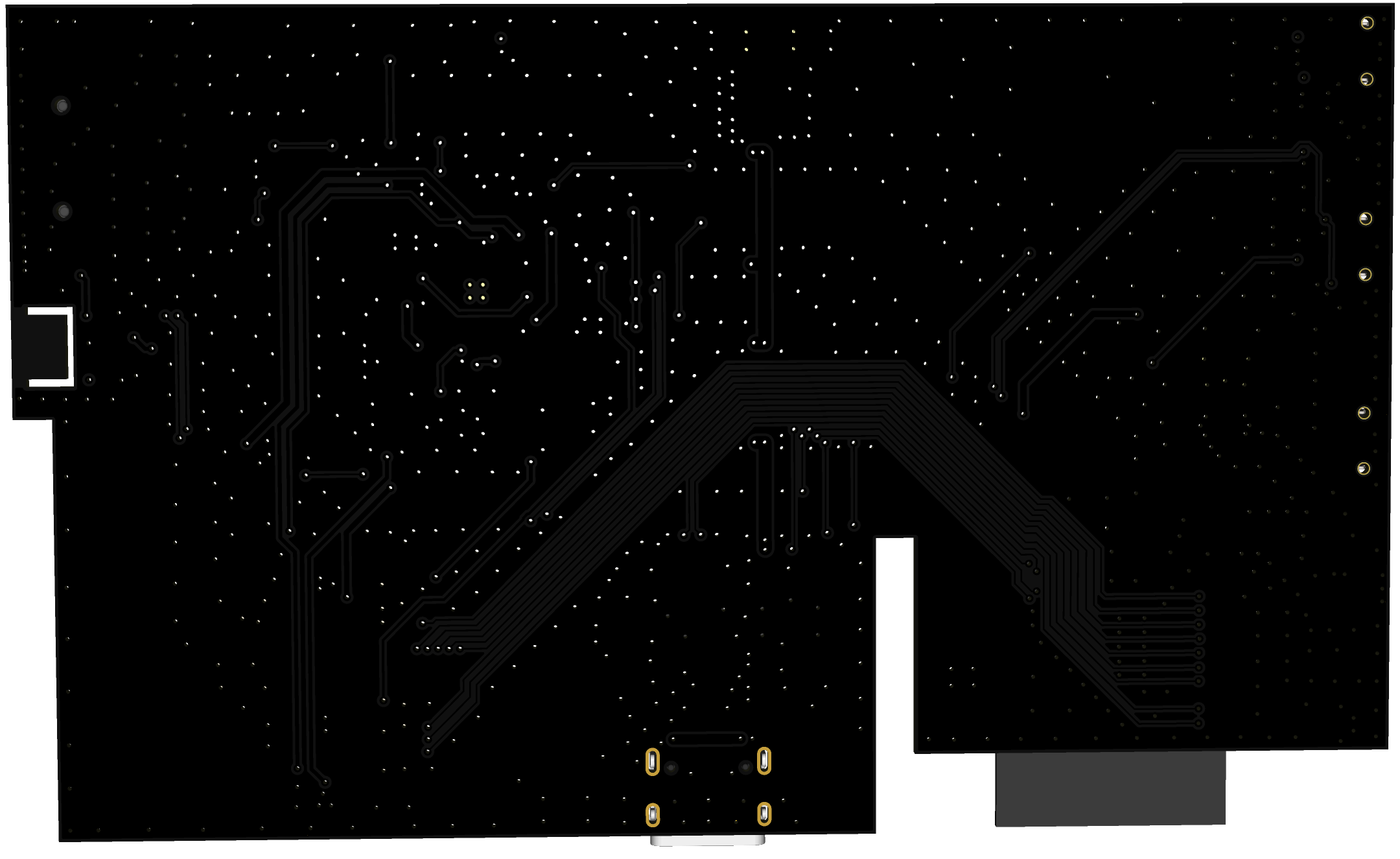
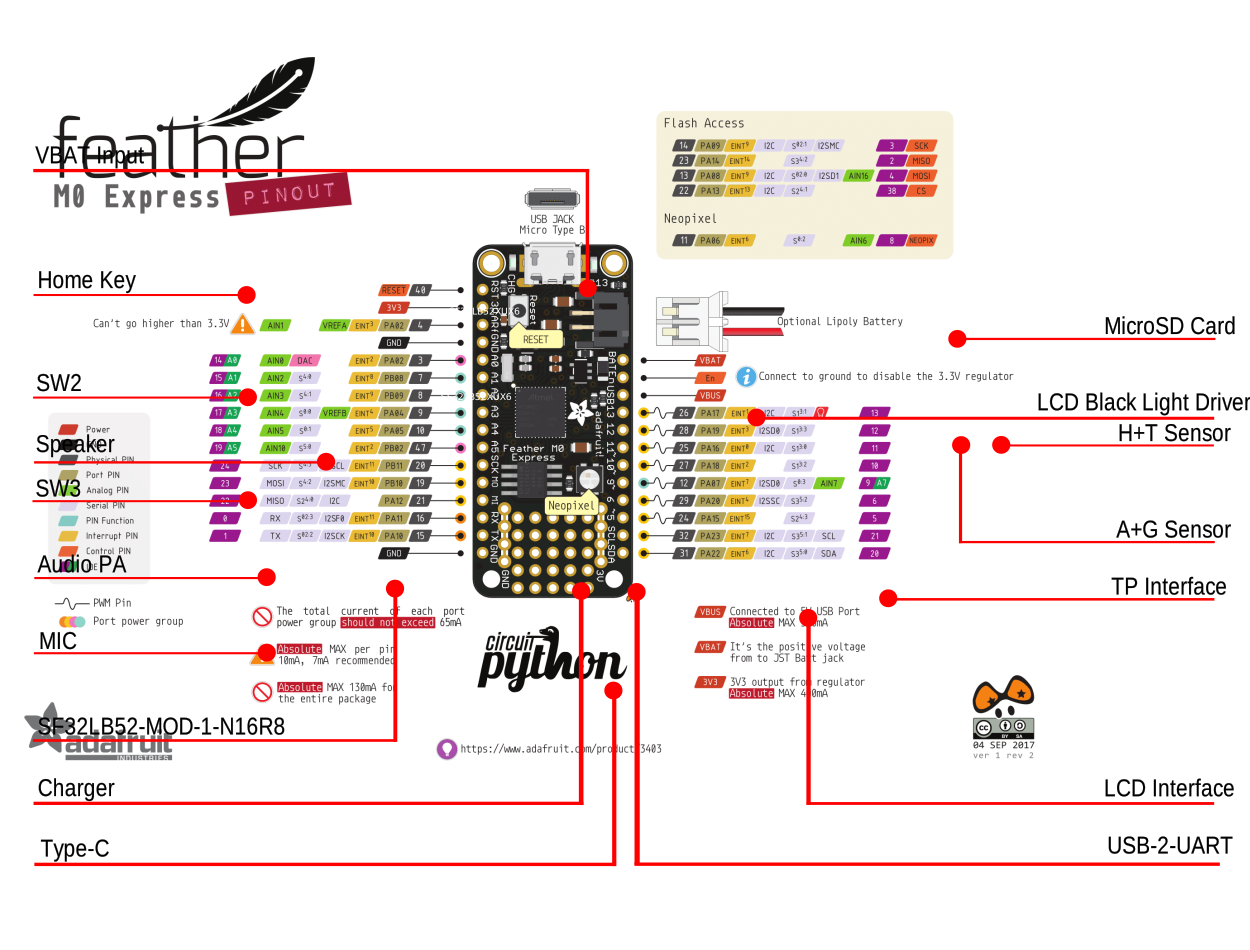
The main board of the SF32LB52-OED-6’-EPD development board is the core of the entire kit. It has an onboard SF32LB52-MOD-1-N16R8 module and provides a 34P FPC connector for connecting the EPD display.
E-Paper Display Kit Assembly Introduction
Display Installation
The LCD and TP of the e-paper display use separate FPCs, which are installed onto the development board through the FPC connectors. The FPC flexible flat cables for the display and TP are fragile, so handle them carefully during installation. FPC installation is shown in the figure below:
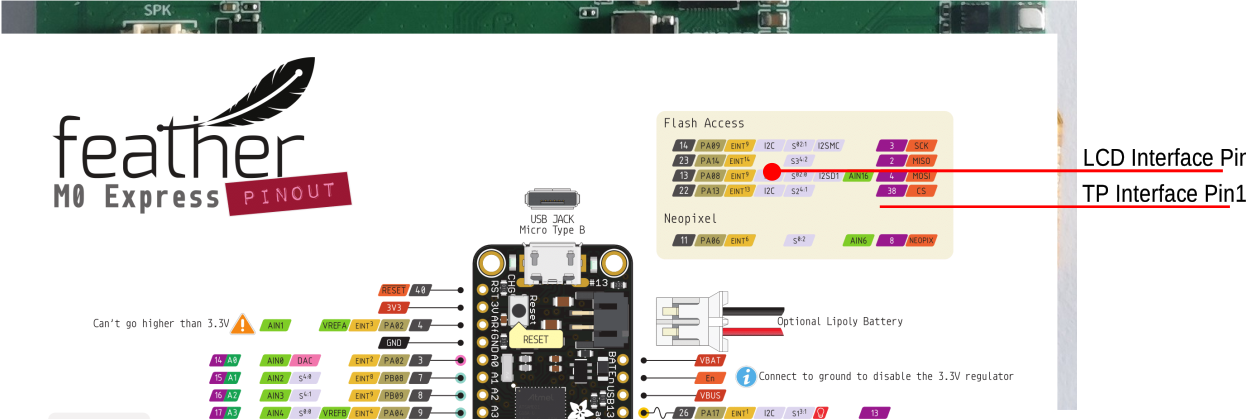
Install the 6-inch e-paper display onto the development board:
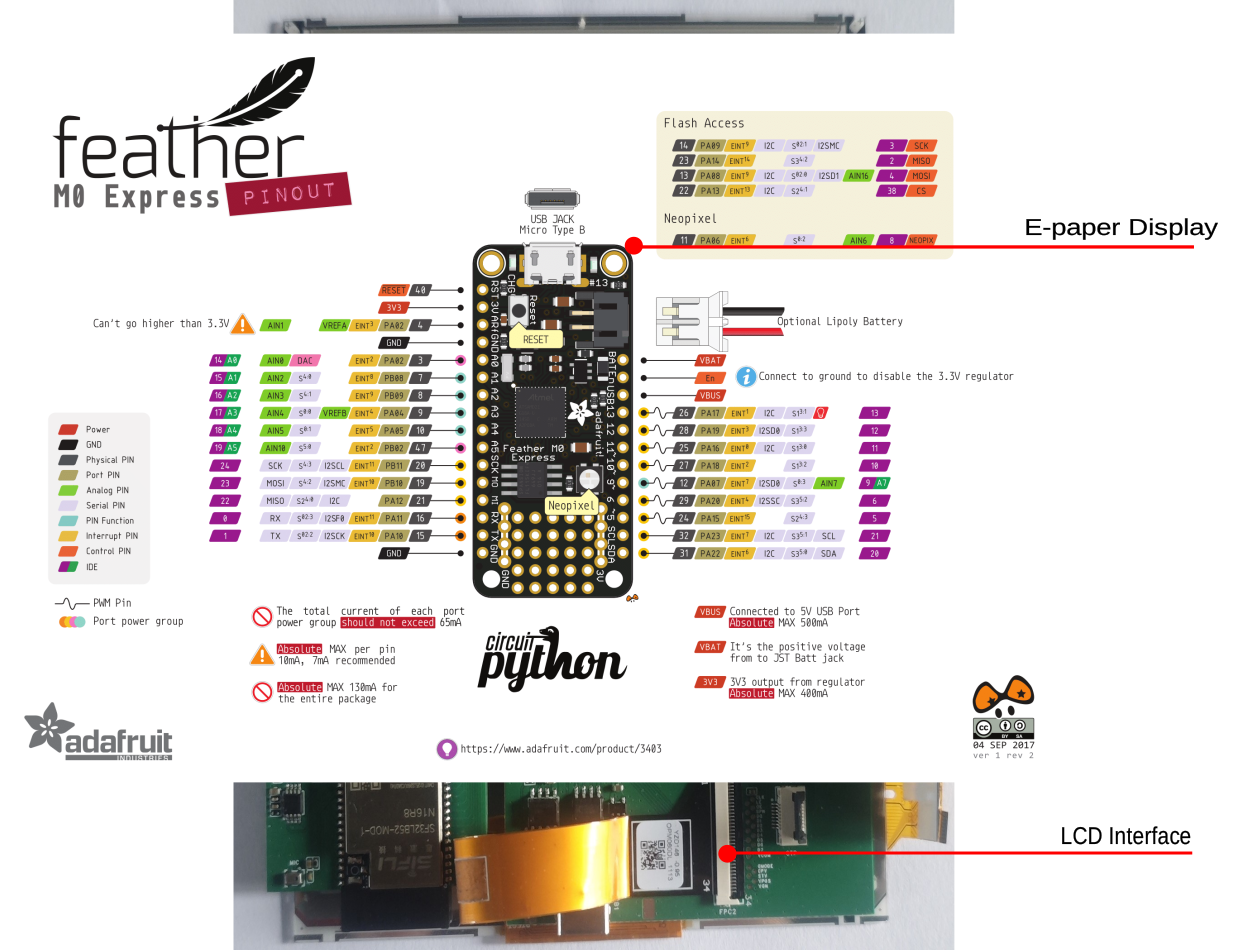
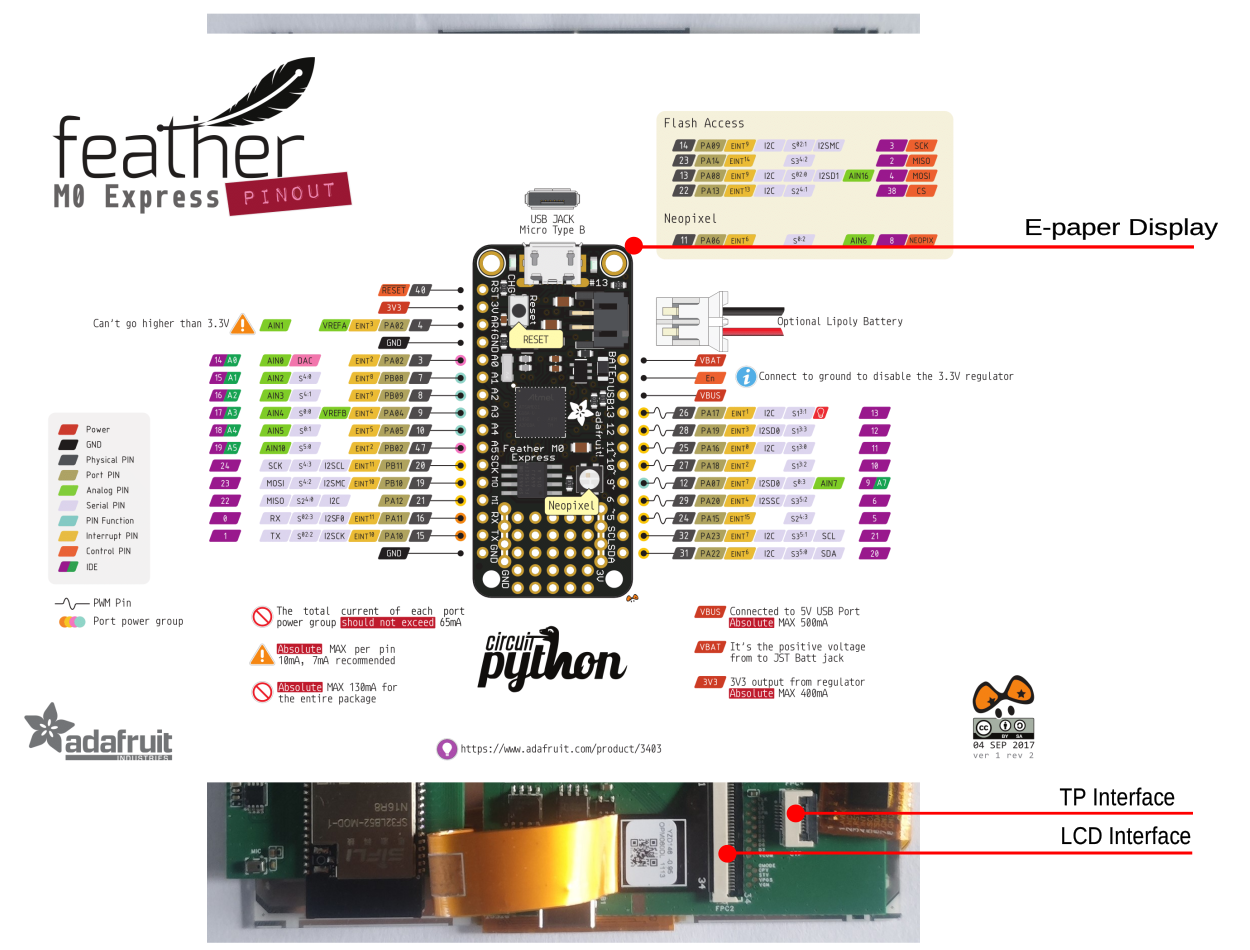
Speaker Installation
The development board supports speakers with an MX1.25 type 2P terminal connector. A speaker with a 3Ω/4W specification is recommended. Installation is shown in the figure below:
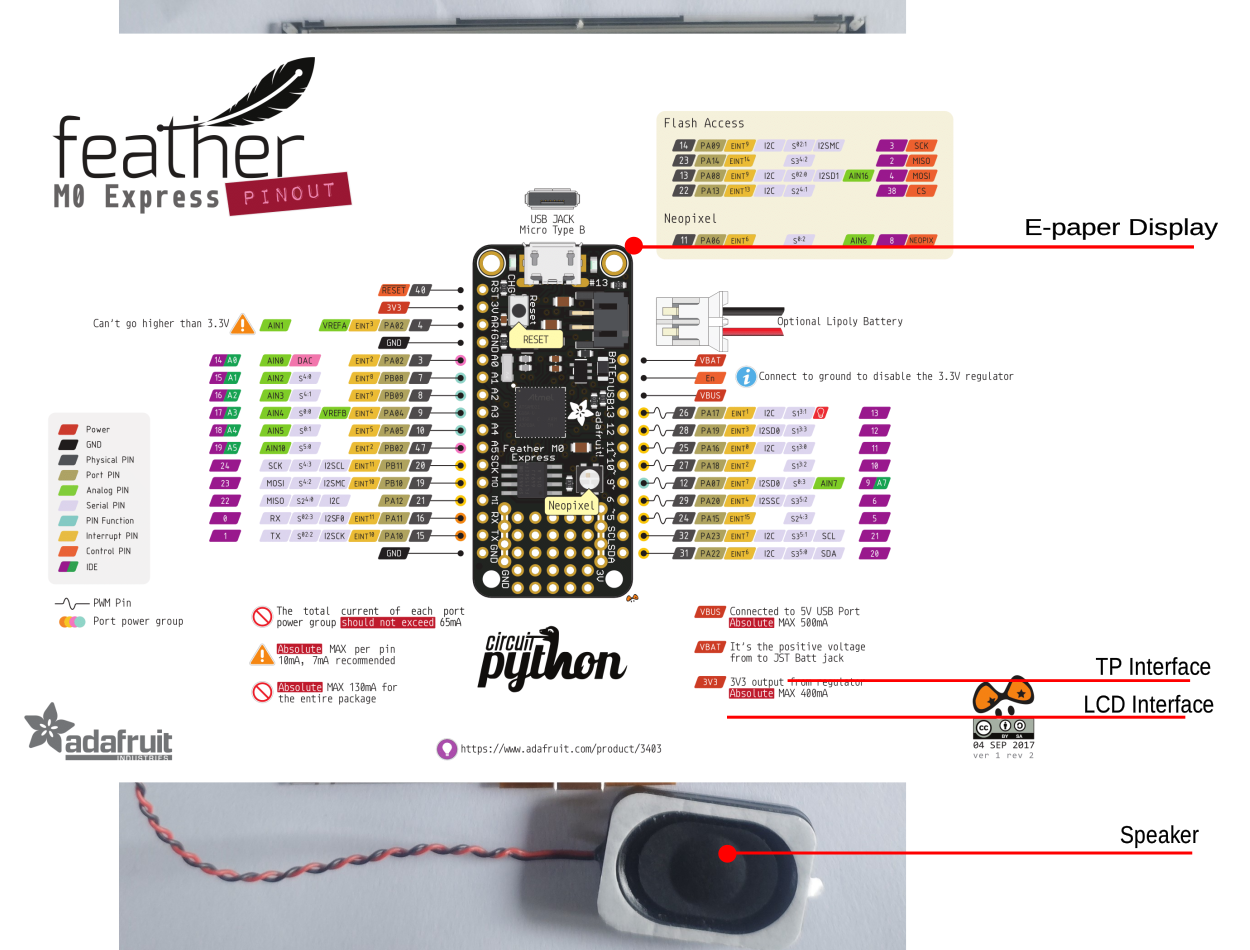
Battery Installation
The development board supports lithium batteries with an MX1.25 type 2P terminal connector. A 1500mAh lithium battery is recommended. Installation is shown in the figure below:
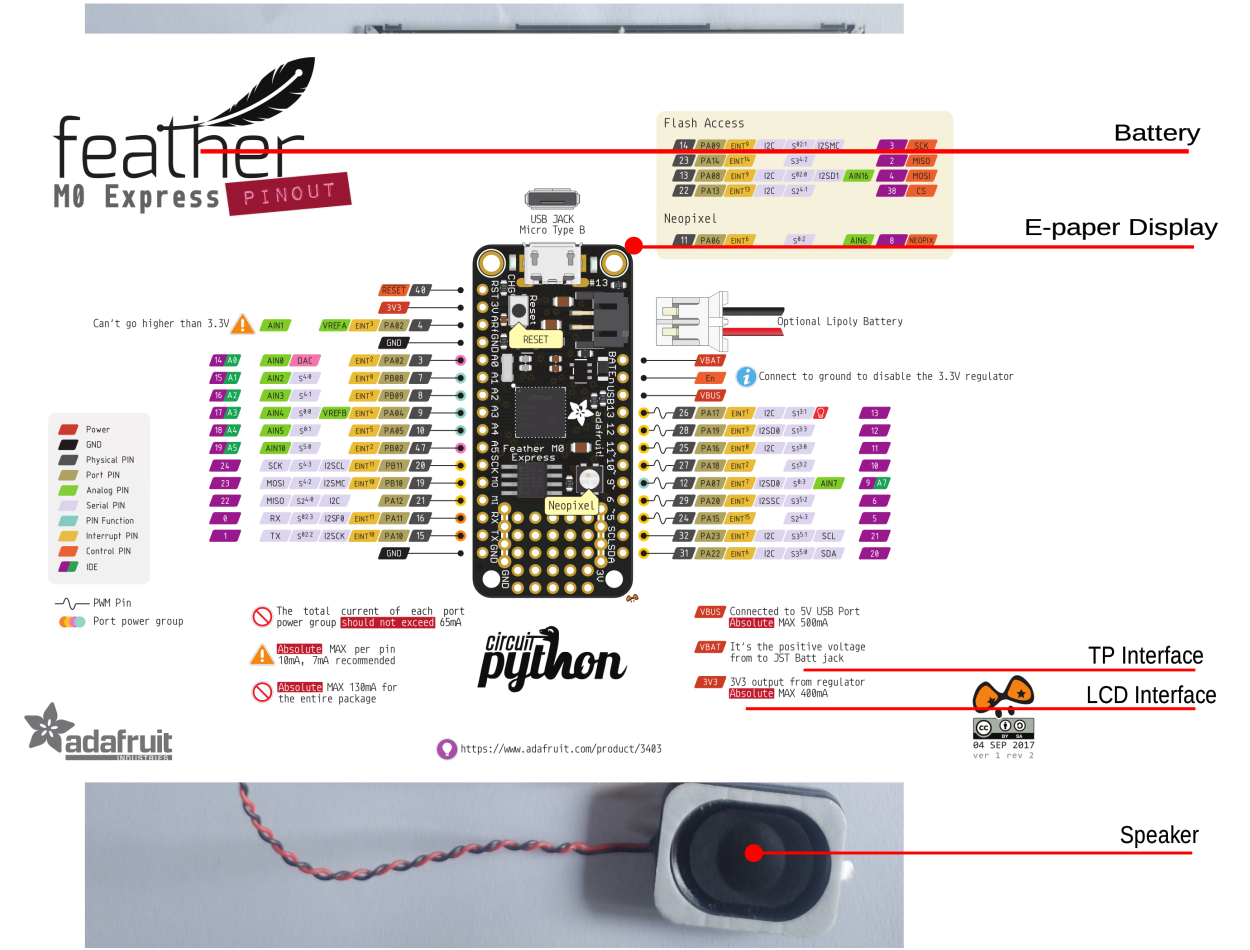
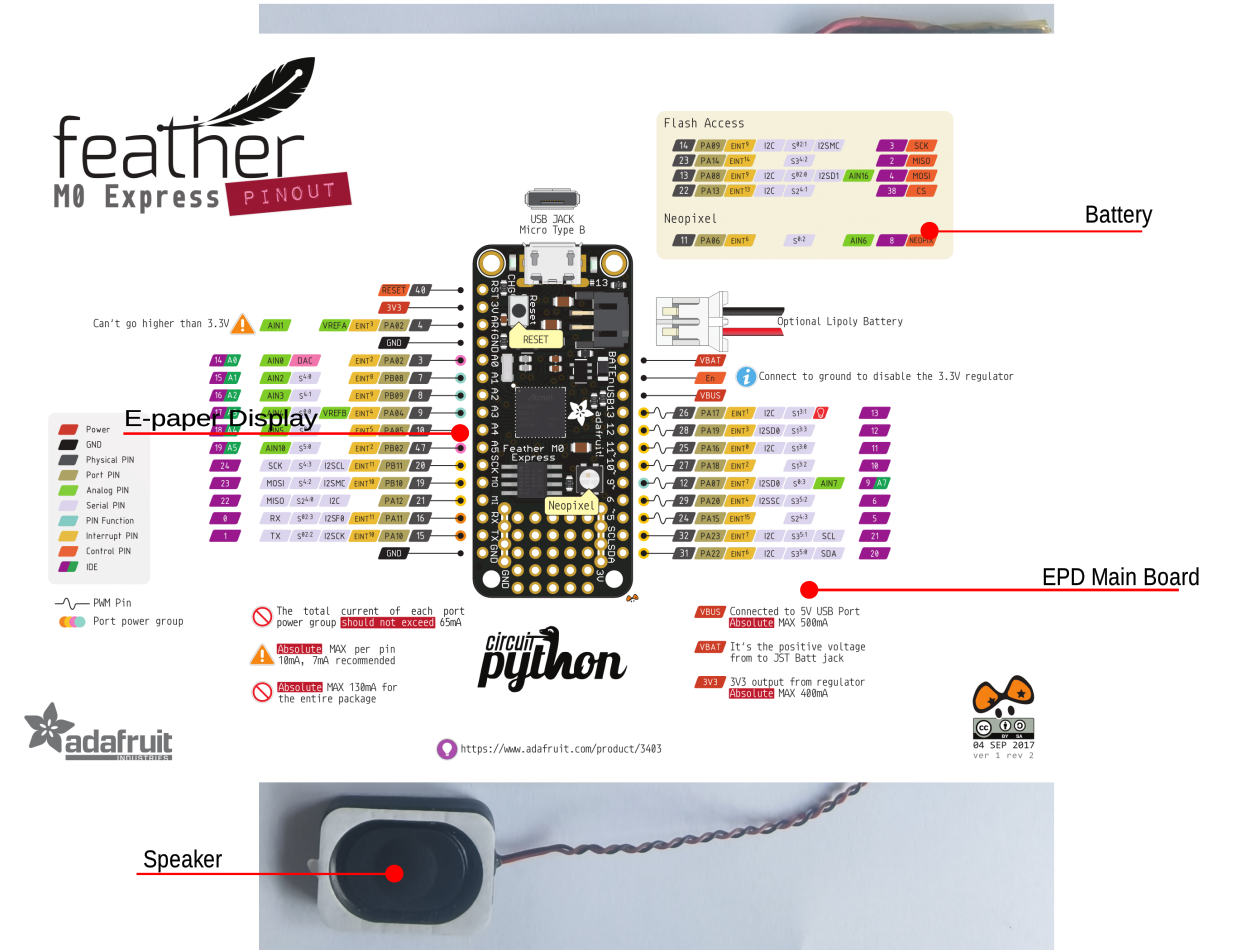
Complete E-Paper Display Kit
After the display, speaker, and battery are installed on the development board, the correct installation is shown in the figure below:
Application Development
This section mainly describes how to set up the hardware and software, flash firmware to the development board, and develop applications.
Required Hardware
1x SF32LB52-OED-6’-EPD (including SF32LB52-MOD-1-N16R8 module)
1x LCD module (奥翼 6-inch e-paper display OPM060DA)
1x 1000mAh ~ 1500mAh lithium battery
1x USB2.0 data cable (standard Type-A to Type-C)
1x computer (Windows, Linux, or macOS)
Note
When using the development board, the battery must be connected. The USB cable is used only for charging, serial port debugging, or firmware flashing.
Make sure to use an appropriate USB data cable. Some cables are for charging only and cannot be used for data transfer or firmware flashing.
Optional Hardware
1x speaker
1x TF Card
Hardware Setup
Prepare the development board and load the first sample application:
Correctly connect the e-paper display flexible flat cable to the development board;
Correctly connect the battery to the development board;
Open SiFli’s SifliTrace tool software and select the correct COM port;
Plug in the USB data cable to connect the PC to the USB-to-UART port on the development board;
The LCD display lights up, and you can interact with the touchscreen using your finger.
Hardware setup is complete. You can now proceed with software setup.
Note
Some development boards, such as Huangshan Pi and SF32LB52-DevKit-Nano-N16R16, reset through the RTS pin of the onboard USB-to-UART chip. This is mainly intended to make board reset easier. The newer SifliTrace tool already supports RTS reset.
Q: This design can cause an inconvenience: after the board is powered on again, the first serial-port connection made by a tool may trigger a board reset. In some cases, opening the serial port during use may power off the board.
A: Disable hardware flow control to resolve this issue. Open Device Manager -> right-click the port and select Properties -> Port Settings (Advanced) -> select Disable modem control.
Software Setup
For how to quickly set up the development environment for the SF32LB52-OED-6’-EPD development board, refer to the software-related documents.
Hardware Reference
This section provides more information about the development board hardware.
GPIO Assignment List
The table below lists the GPIO assignments for the pins of the SF32LB52-MOD-1-N16R8 module, used to control specific components or functions on the development board.
Pin |
Pin Name |
Function |
|---|---|---|
1 |
GND |
Ground |
2 |
PA_44 |
TPS_PWRCOM, EPD power VCOM enable |
3 |
PA_43 |
EDP_D7, EPD signal |
4 |
PA_42 |
EDP_D6, EPD signal |
5 |
PA_23 |
XTAL32K_XO, default NC |
6 |
PA_22 |
XTAL32K_XI, default NC |
7 |
PA_41 |
EDP_D5, EPD signal |
8 |
PA_40 |
EDP_D4, EPD signal |
9 |
PA_39 |
EDP_D3, EPD signal |
10 |
PA_38 |
TPS_PWRUP, EPD power-on control |
11 |
PA_37 |
EDP_D2, EPD signal |
12 |
PA_36 |
SENSOR_SDA, sensor I2C SDA interface |
13 |
PA_35 |
SENSOR_SCL, sensor I2C SCL interface |
14 |
PA_34 |
HOME and long-press reset button |
15 |
PA_33 |
ADC function button, supports two KEYs |
16 |
PA_32 |
CTP_3.3V power enable |
17 |
VDD33_VOUT2 |
3.3V power output (no output by default; output is available only after software configuration) |
18 |
PA_24 |
SPI1_DIO, SD Card interface signal |
19 |
PA_25 |
SPI1_DI, SD Card interface signal |
20 |
PA_26 |
CHG_STATUS, charging status indicator signal |
21 |
PA_27 |
SD Card_CD signal, LED |
22 |
PA_28 |
SPI1_CLK, SD Card interface signal |
23 |
PA_29 |
SPI1_CS, SD Card interface signal |
24 |
PA_30 |
CTP_INT, touchscreen interrupt signal |
25 |
PA_31 |
CTP_RST, touchscreen reset signal |
26 |
GND |
Ground |
27 |
VSYS |
3.2~4.7V power input |
28 |
PA_20 |
TPS_WAKEUP, EPD power wake-up signal |
29 |
PA_19 |
DB_UART_TXD, program download and software debugging interface |
30 |
PA_18 |
DB_UART_RXD, program download and software debugging interface |
31 |
PA_11 |
TPS_SDA, touchscreen I2C |
32 |
PA_10 |
TPS_SCL, touchscreen I2C |
33 |
AU_DAC1P_OUT |
analog Audio output signal |
34 |
AU_DAC1N_OUT |
analog Audio output signal |
35 |
GND |
Ground |
36 |
MIC_BIAS |
MIC bias voltage |
37 |
MIC_ADC_IN |
MIC input signal |
38 |
PA_09 |
EDP_LE, EPD signal |
39 |
PA_08 |
EDP_D1, EPD signal |
40 |
PA_07 |
EDP_D0, EPD signal |
41 |
PA_06 |
EDP_SPH, EPD signal |
42 |
PA_05 |
EDP_OE, EPD signal |
43 |
PA_04 |
EDP_CLK, EPD signal |
44 |
PA_03 |
EDP_GMODE, EPD signal |
45 |
PA_02 |
AU_PA_EN, Audio power amplifier enable signal |
46 |
PA_01 |
EDP_CPV, EPD signal |
47 |
PA_00 |
EDP_STV, EPD signal |
48 |
GND |
Ground |
49 |
GND |
Ground |
50 |
GND |
Ground |
51 |
GND |
Ground |
52 |
GND |
Ground |
53 |
GND |
Ground |
54 |
GND |
Ground |
55 |
GND |
Ground |
56 |
GND |
Ground |
57 |
GND |
Ground |
58 |
GND |
Ground |
58 |
GND |
Ground |
60 |
GND |
Ground |
61 |
VBATS |
Battery voltage detection input |
62 |
NC |
NO Connection |
63 |
PA_15 |
NO Connection |
64 |
PA_16 |
NO Connection |
65 |
PA_17 |
NO Connection |
66 |
PA_14 |
NO Connection |
67 |
PA_13 |
NO Connection |
68 |
PA_12 |
NO Connection |
Important
The SF32LB52-OED-6’-EPD is compatible with the SF32LB52-MOD-1 module.
Module pin 17 is a 3.3 V power output (no output by default; output is available only after software configuration).
Module pin 27 VBAT is a 3.2~4.7 V power input.
For the SF32LB-MOD-1 module, the power-on threshold of the VBAT power supply is set to 3.58 V, and the power-off threshold is set to 3.48 V. For non-battery-powered applications, it is recommended to supply 3.8 V to VBAT.
Module pin 62 is NC.
Module pins 63~68 are connected to the module’s internal NOR Flash by default and cannot be used by the development board. To use the SDIO interface, select the module version without flash.
34p E-Paper Display LCD FPC Interface Definition
Pin |
Pin Name |
Function |
|---|---|---|
1 |
VNEG |
Negative power supply source driver |
2 |
VGL |
Negative power supply gate driver |
3 |
VSS |
Ground |
4 |
NC |
NO Connection |
5 |
NC |
NO Connection |
6 |
VDD |
Digital power supply drivers |
7 |
VSS |
Ground |
8 |
CLK |
Clock source driver |
9 |
VSS |
Ground |
10 |
LE |
Latch enable source driver |
11 |
OE |
Output enable source driver |
12 |
SPH |
Start pulse source driver |
13 |
D0 |
Data signal source driver |
14 |
D1 |
Data signal source driver |
15 |
D2 |
Data signal source driver |
16 |
D3 |
Data signal source driver |
17 |
D4 |
Data signal source driver |
18 |
D5 |
Data signal source driver |
19 |
D6 |
Data signal source driver |
20 |
D7 |
Data signal source driver |
21 |
VCOM |
Common connection |
22 |
NC |
NO Connection |
23 |
NC |
NO Connection |
24 |
NC |
NO Connection |
25 |
NC |
NO Connection |
26 |
VSS |
Ground |
27 |
GMODE |
Output mode selection gate driver |
28 |
CPV |
Shift clock input |
29 |
STV |
Start pulse gate driver |
30 |
NC |
NO Connection |
31 |
VBORDER |
Border connection,NO Connection |
32 |
VSS |
Ground |
33 |
VPOS |
Positive power supply source driver |
34 |
VGH |
Positive power supply gate driver |
8p CTP FPC Interface Definition
Pin |
Pin Name |
Function |
|---|---|---|
1 |
VSS |
Ground |
2 |
VSS |
Ground |
3 |
PA_11 |
CTP I2C_SDA |
4 |
PA_10 |
CTP I2C_SCL |
5 |
PA_29 |
CTP INT |
6 |
PA_31 |
CTP RTN |
7 |
NC |
NO Connection |
8 |
VDD_3V3 |
3.3 V power output |
Power Supply Description
The development board supports battery power supply only. Connector H20 connects to a lithium battery for power supply.
The VBUS of USB-TypeC is only used for charging and cannot directly power the board for operation.
Hardware Setup Options
Connect a USB cable to the USB-to-UART port, open SiFli Technology’s firmware flashing tool, and select the corresponding COM port and firmware.
Download Mode
Check the BOOT option and power on. After startup, the board enters download mode, and firmware flashing can be completed.
Software Development Mode
Clear the BOOT option and power on. After startup, the board enters serial port log output mode, which is software debugging mode.
For details, refer to Firmware Flashing Tool Impeller
Charging and Battery Selection
The development board integrates an LP4056HSPF linear charging chip, supports a maximum charging current of 1A, and is configured by default for a 1000mA constant-current charging current.
A 1500mAh single-cell polymer lithium battery is recommended. The battery interface is an MX1.25mm connector. For polarity, refer to the silkscreen on the battery holder of the development board.
LCD Display Interface
The development board supports parallel-interface e-paper displays. The connector is a 34p-0.5pitch FPC with contacts on both sides for top and bottom contact. Refer to the signal pin sequence defined above.
Supported display model: 奥翼 OPM060DA
Audio Interface
The development board has an onboard MEMS MIC and audio power amplifier chip.
Supports audio signal input from the onboard mic.
Supports an external speaker (up to 3W/4 ohms). Speaker connector specification: MX1.25mm connector.
Obtaining Samples
E-Paper Display Development Board Ultra-Low-Power E-Book Electronic Desk Nameplate